

SEO for Beginners
Understanding SEO for Beginners: A Comprehensive Guide
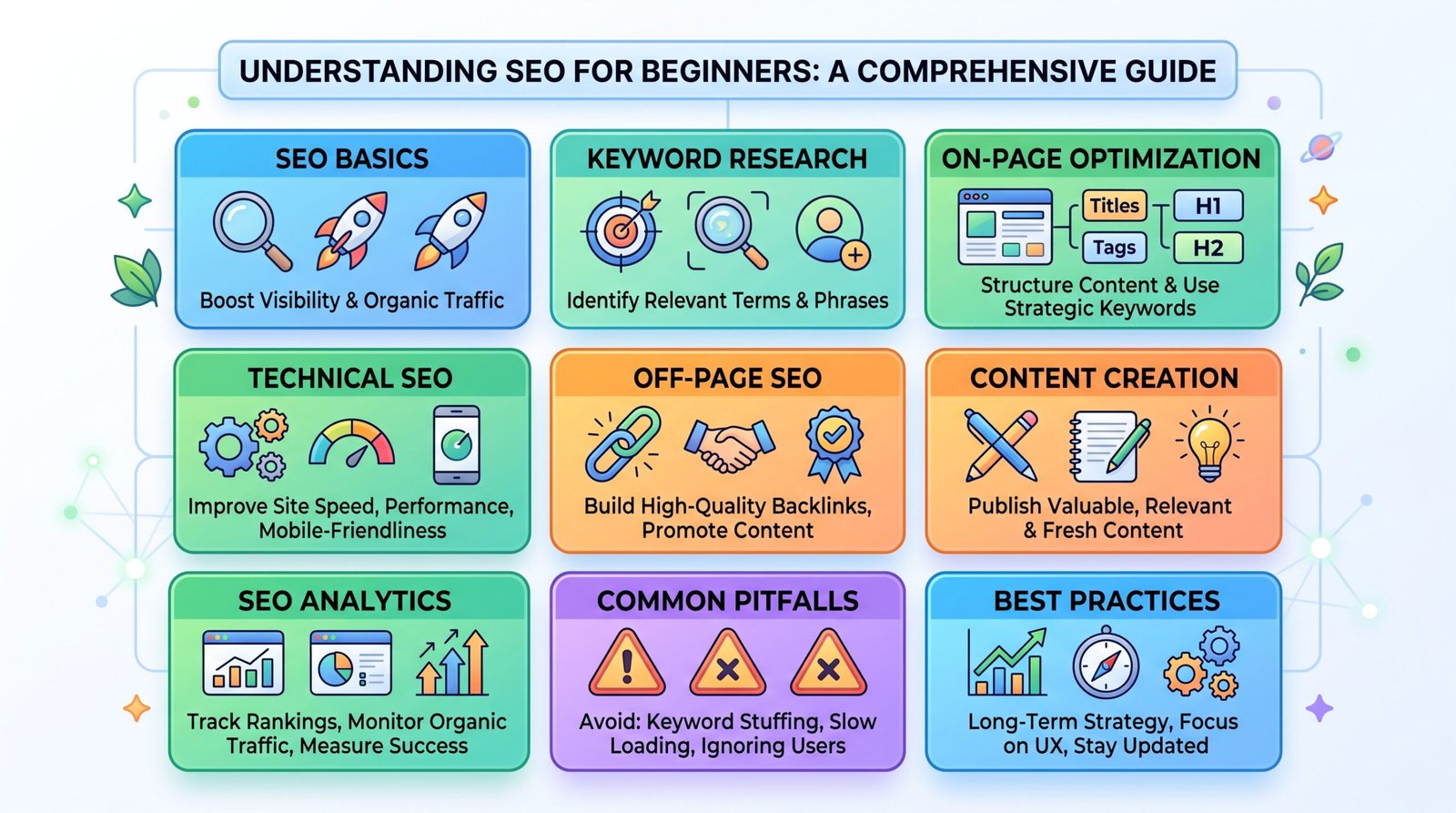
Welcome to our comprehensive guide on search engine optimization (SEO). This article is designed to help you understand the basics of SEO, from key concepts and practical strategies to common pitfalls and best practices. By the end, you’ll be better equipped to optimize your content and websites for improved online visibility.
What Is SEO?
- Increased Visibility: Higher rankings on search engines mean more visibility to potential customers.
- Brand Awareness: Effective SEO can help establish your brand as a leader in your industry by making it easier for people to find you online.
- Cost-Effective Marketing: Compared to other forms of marketing, such as paid advertising, SEO is often more cost-effective and provides long-term benefits.
- Customer Trust: Websites that rank well on search engines are seen as credible. This can foster trust among potential customers.
Basic SEO Strategies
To start your journey in SEO, you need to understand the fundamental strategies:
- Keyword Research: Identify the keywords and phrases that people use when searching for content related to your business. Tools like Google Keyword Planner can help with this.
- On-Page Optimization: This involves optimizing various elements of a webpage, such as title tags, meta descriptions, headers, and image alt text.
- Content Quality: Create high-quality, relevant, and engaging content that addresses the needs and interests of your target audience. Regular updates keep your website fresh.
- Mobile Optimization: With over 50% of internet traffic coming from mobile devices, ensuring your site is responsive and user-friendly on smartphones and tablets is crucial.
Common SEO Mistakes
Avoid these common SEO mistakes to ensure your efforts are effective:
- Focusing Only on Keywords: While keywords are important, stuffing too many can harm user experience and hurt rankings.
- Ignoring Mobile Users: A mobile-friendly website is essential for a positive user experience and better search engine performance.
- Lack of Quality Content: Poor content or not updating it regularly can make your site less relevant to users and search engines alike.
Best Practices for SEO
To maximize the effectiveness of your SEO efforts, follow these best practices:
- Use Semantic HTML: Structuring content with semantic elements (like
<header>,<footer>, and<article>) can improve accessibility and SEO. - Optimize URLs: Keep URLs clean, descriptive, and short for better readability and search engine performance.
- Build High-Quality Backlinks: Links from reputable sources can significantly boost your site’s authority and rankings.
Useful Tips for SEO Success
In addition to the basic strategies, here are some useful tips to consider:
- Monitor Analytics: Use tools like Google Analytics to track your website’s performance and make data-driven decisions.
- Stay Updated with Trends: SEO is an evolving field. Stay informed about new trends, updates in algorithms, and changes in user behavior.
- Engage with Users: Encourage comments, shareable content, and social media engagement to improve user interaction and site traffic.
Frequently Asked Questions (FAQ)
Here are some common questions about SEO:
- How do I choose the right keywords? Use keyword research tools and consider long-tail keywords for better targeting.
- Can I use too many keywords on a page? Yes, overusing keywords can be seen as spammy. Aim for natural integration.
- Does Google penalize SEO practices? While unethical practices can harm your rankings, following best practices helps avoid penalties and enhances your site’s overall health.
Conclusion
In conclusion, SEO is a powerful tool for enhancing online presence. By understanding the basics, avoiding common mistakes, implementing best practices, and staying informed about new trends, you can significantly improve your website’s visibility on search engines.
To learn more about advanced SEO techniques and tools, check out resources like Moz or Ahrefs.