
Event Marketing Trends 2026
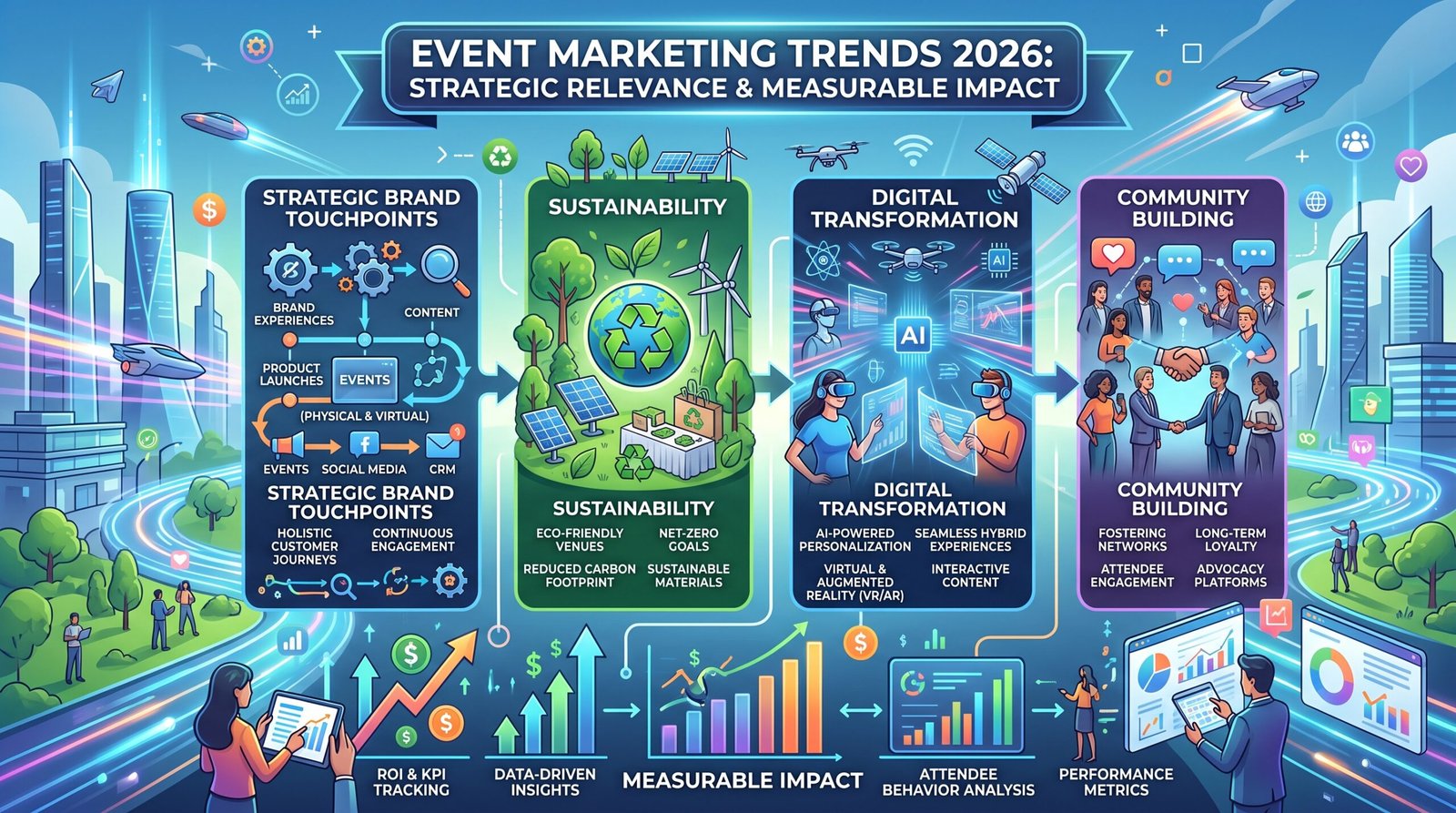
Event Marketing Trends 2026: Strategic Relevance and Measurable Impact
Discover how events are evolving into strategic brand touchpoints in 2026, with a focus on sustainability, digital transformation, and community building.
Introduction to Event Marketing Trends 2026
VOK DAMS has identified ten key developments shaping the future of event marketing. These trends underscore how companies are increasingly leveraging live experiences for strategic brand communication, with a focus on sustainability and technology.
The Strategic Role of Events in 2026
Events have become essential tools for brands to generate attention, strengthen relationships, and deliver measurable impact. They are no longer isolated communication tools but integral parts of a company’s overall marketing strategy.
Digital Spaces vs Live Experiences
Content in the digital space is virtually infinite, making visibility a scarce resource. Live experiences bypass these barriers by creating presence and immediate engagement without filters or scrolling. This makes live events more impactful than ever.
Focus on Meaningful Experiences
In an era where almost everything is always available, uniqueness drives engagement. Companies will invest in bold, immersive experiences that spark emotion and conversation value. These moments extend beyond the event itself, creating lasting impact.
The Role of Artificial Intelligence
AI is transforming event planning by enabling pre-data analysis and better decision-making before events occur. This allows for more precise concepts and more impactful experiences, leaving room for genuine live moments.
Micro Events as Strategic Tools
Micro events are increasingly favored for their ability to create closeness, relevance, and deep dialogue. They complement flagship events with highly efficient touchpoints that can be rolled out across regions or markets.
Sustainability in Event Marketing
Sustainability is becoming a core expectation for brands. VOK DAMS has introduced the SDG Event Compass to help event teams integrate sustainability measures systematically with the UN SDGs, ensuring future-oriented, measurable impact.
Conclusion: Embracing Change in Event Marketing
Event marketing trends in 2026 are clear. Companies must embrace digital transformation, focus on meaningful experiences, and prioritize sustainability to stay relevant and impactful.
Frequently Asked Questions (FAQ)
- Q: How can companies use AI in event planning?
- A: Companies can leverage AI for pre-data analysis, refining concepts and optimizing events before they happen. This enables better decision-making and more impactful experiences.
- Q: Why are micro events becoming popular?
- A: Micro events create closeness and relevance without the overwhelm of large stages. They enable deeper exchanges, stronger participation, and more meaningful dialogues.
- Q: How can businesses ensure their events align with sustainability goals?
- A: Businesses can use tools like the SDG Event Compass to integrate sustainable practices systematically with UN SDGs. This ensures future-oriented, measurable impact in events.