

Understanding the Limits of Walking 10,000 Steps for Weight Loss and Fitness Goals
Understanding the Limits of Walking 10,000 Steps for Weight Loss and Fitness Goals
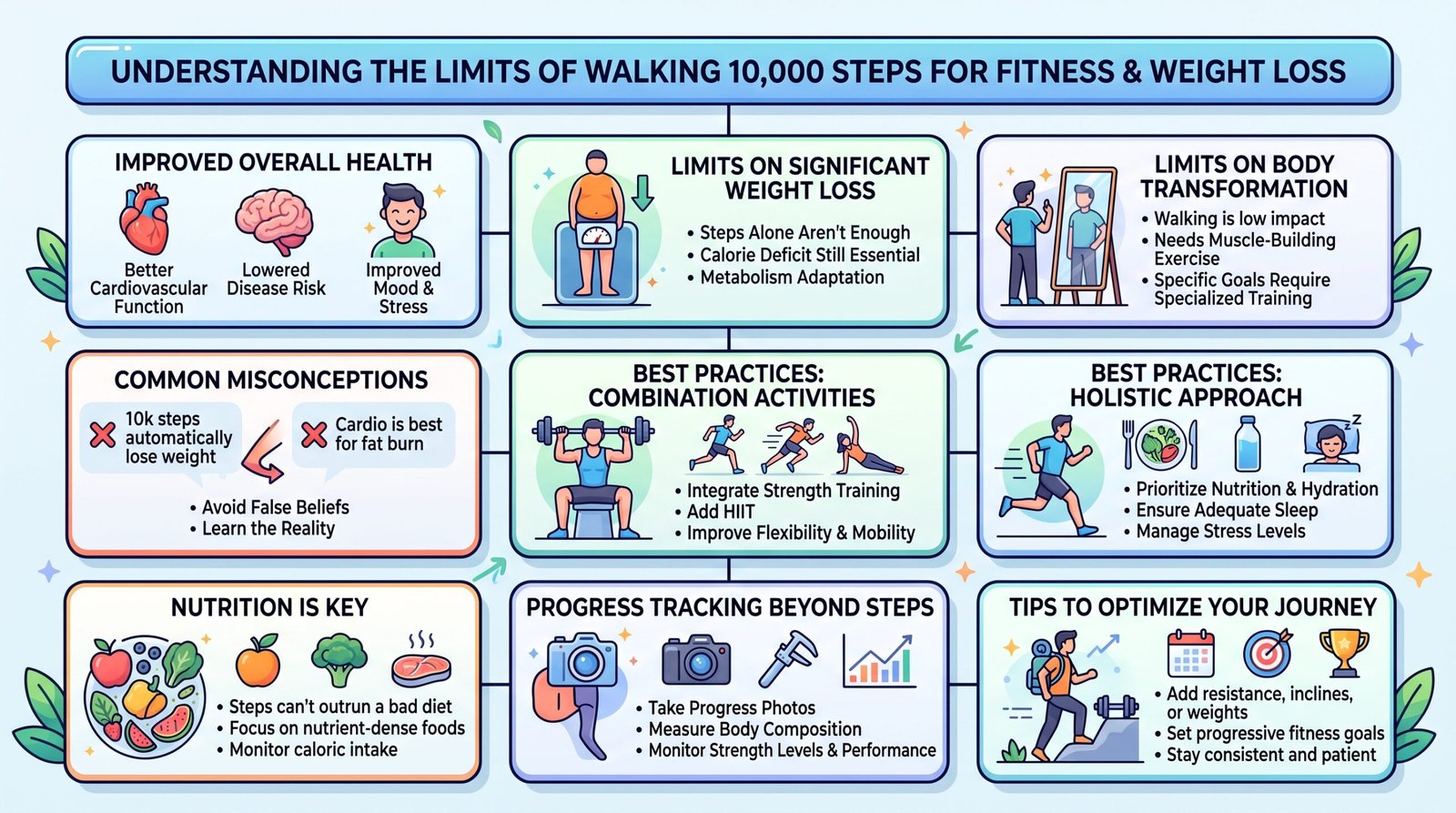
Walking 10,000 steps a day has long been seen as a practical and achievable fitness goal that can improve overall health. However, experts caution that this benchmark may not be sufficient on its own for significant weight loss or body transformation. This blog post delves into the importance of understanding the limits of walking alone, explores common misconceptions, provides best practices, and offers tips to optimize your fitness journey.
The Benefits of Walking 10,000 Steps
Walking is a low-impact form of exercise that supports cardiovascular health, improves circulation, helps manage blood pressure, and contributes positively to mental well-being. On average, reaching the 10,000 steps mark can burn an estimated 300 to 500 calories, depending on your body weight, walking speed, and terrain.
- Supports cardiovascular health
- Improves circulation
- Aids in blood pressure management
- Bolsters mental well-being
- Contributes to calorie expenditure
The Limitations of 10,000 Steps Alone
While walking is a beneficial form of exercise, it has its limitations. The body adapts to repetitive low-intensity activity over time, reducing the number of calories burned through the same routine. Additionally, walking alone does not provide sufficient resistance to build substantial muscle mass, an important component for improving overall fitness and metabolism.
“The key is to vary your exercise regimen to avoid plateaus and ensure comprehensive results.” – Fitness Specialist, Jane Doe
Nutrition’s Role in Fitness Outcomes
Nutrition plays a critical role in determining the effectiveness of any fitness routine. Even consistent walking can be offset by high-calorie or unbalanced dietary choices. A single calorie-dense meal or snack can negate the energy expenditure from daily walking, making a controlled diet essential for those targeting weight loss or improved body composition.
Combining Walking with Other Forms of Exercise
Fitness specialists recommend combining walking with other forms of exercise to achieve more comprehensive results. Strength training and high-intensity interval training (HIIT) can complement walking by providing resistance, enhancing muscle mass, and boosting metabolism. Increasing the intensity of your walking routine through brisk walking, incline routes, or interval pacing can also enhance calorie burn and cardiovascular benefits.
- Strength training
- High-Intensity Interval Training (HIIT)
- Brisk walking
- Incline routes
- Interval pacing
Common Mistakes to Avoid
Misunderstanding the limits of 10,000 steps alone can lead to several common mistakes:
- Relying solely on step count as a measure of fitness.
- Ignoring dietary habits that can negate exercise benefits.
- Over-relying on walking for significant muscle growth and metabolism improvement.
Best Practices for Optimal Fitness Results
To achieve sustainable fitness results, a balanced approach is essential. Here are some best practices:
- Combine walking with other forms of exercise. Incorporate strength training and HIIT to build muscle mass and enhance metabolism.
- Vary your exercise routine. Avoid plateaus by changing the intensity, duration, or type of activities you engage in.
- Monitor your diet. Maintain a balanced and controlled diet to support your fitness goals.
Useful Tips for Beginners
- Start with achievable goals. Begin with walking 5,000 steps per day and gradually increase the step count over time.
- Set realistic expectations. Understand that significant weight loss or body transformation may take longer than expected.
- Stay consistent. Consistency is key to achieving long-term fitness goals.
Frequently Asked Questions (FAQ)
-
- Q: Is 10,000 steps a day enough for weight loss?
A: While 10,000 steps can contribute to weight loss, it may not be sufficient on its own. A balanced approach that includes varied exercise and proper nutrition is more effective.
-
- Q: Can I rely solely on walking for muscle growth?
A: No, walking alone does not provide sufficient resistance to build substantial muscle mass. Incorporate strength training exercises into your routine for better results.
-
- Q: How often should I vary my exercise routine?
A: Vary your exercise routine every 2-3 weeks to avoid plateaus and ensure comprehensive fitness benefits.
Conclusion
In conclusion, while walking 10,000 steps a day remains a useful and achievable goal for general health maintenance and habit-building, it is not a one-size-fits-all solution for getting back into shape. A balanced approach that includes varied exercise, proper intensity, and mindful nutrition is more likely to deliver sustainable fitness results.
For further insights and guidance on achieving your fitness goals, consider checking out the following resources: