

Modern Cold Data Archiving with Geyser Data on Oracle Cloud Infrastructure
Modern Cold Data Archiving with Geyser Data on Oracle Cloud Infrastructure
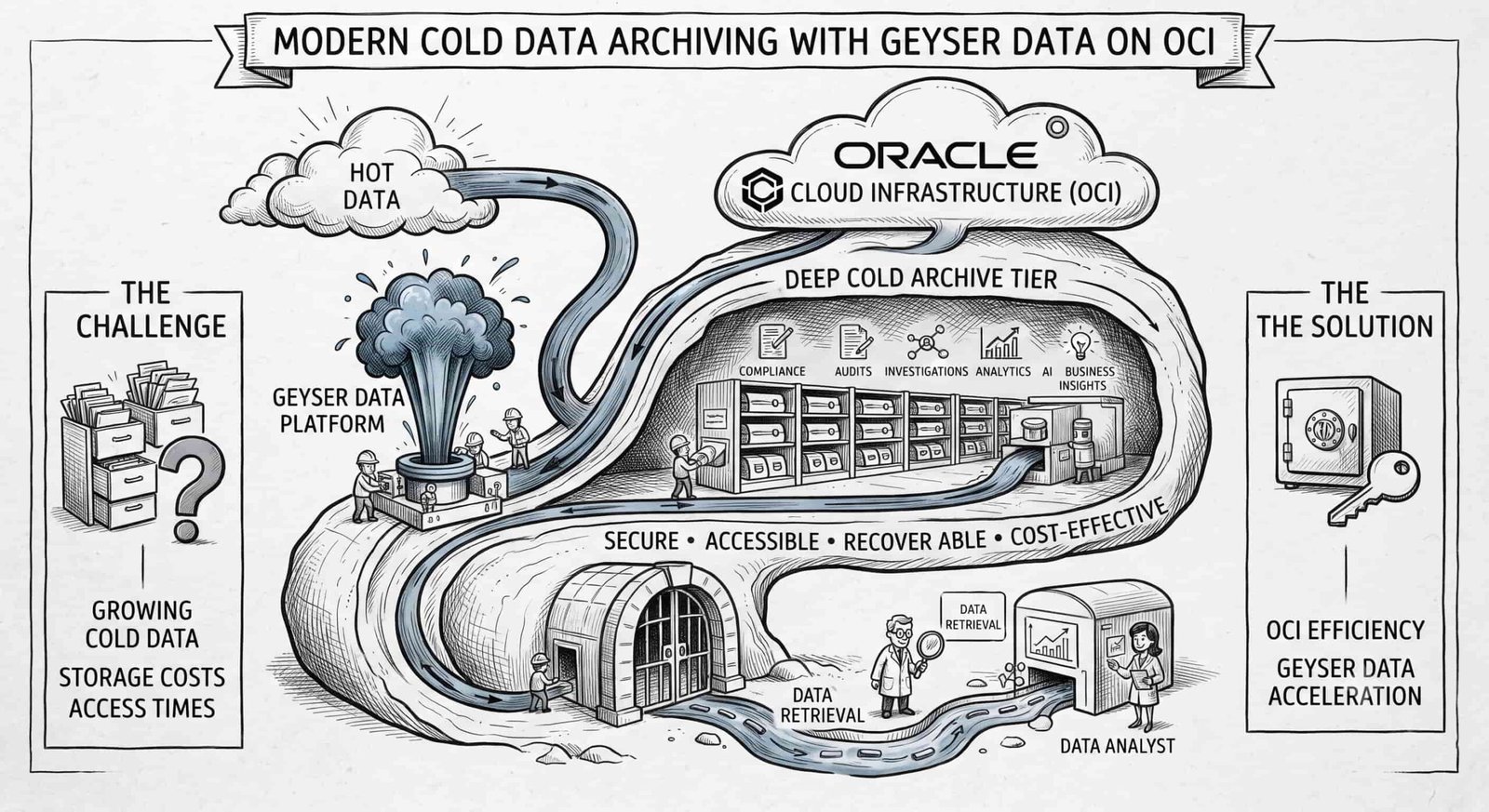
Organizations are generating and retaining more data than ever before, but much of this data becomes cold over time—rarely accessed yet still critical for compliance, audits, investigations, analytics, AI initiatives, and long-term business insights. The challenge is not just where to store such data but also ensuring that archived data remains accessible, recoverable, secure, and cost-effective in the long term.
Challenges with Traditional Archive Strategies
The traditional approach to archiving cold data can create operational and financial challenges. Data may be difficult to locate or restore, requiring specialized knowledge for archive workflows. Retrieval, egress, and API charges often create unpredictable costs, and teams might overuse expensive active storage to avoid the complexities of archive management. Long-term datasets can become disconnected from business users and applications.
Oracle Cloud Infrastructure (OCI) and Geyser Data
Oracle Cloud Infrastructure (OCI) provides a robust enterprise cloud foundation for managing data across multiple storage tiers, making it an ideal platform to build modern cold data archiving strategies. When paired with Geyser Data, organizations can ensure that archived data remains accessible and recoverable without increasing operational complexity or costs.
Flexible Storage Tiers in OCI Object Storage
OCI Object Storage offers flexible storage tiers to help organizations balance cost and accessibility. Lifecycle policies automatically move data between tiers based on age, access patterns, or business rules, ensuring that frequently accessed data remains in active storage while less-used data is moved to archive tiers.
Dedicated Archival Storage with Geyser Data Buckets
Geyser Data extends this strategy by providing dedicated archival storage optimized for long-term retention. Geyser Data Buckets offer a durable, cost-efficient way to retain cold data in a simple and predictable manner. Together, OCI and Geyser Data help organizations reduce dependence on high-cost active storage, simplify archive operations and recovery workflows, support compliance, analytics, and security use cases, and maintain confidence in long-term retention and recovery.
Implementation of Modern Cold Data Archiving
A typical implementation includes four major components:
- Data from on-premises systems, applications, backups, and enterprise workflows can be ingested into OCI Object Storage or directed into an archive strategy using Geyser Data Buckets.
- OCI lifecycle policies automate movement between storage tiers based on retention requirements and access patterns.
- Geyser Data Buckets provide a managed archive destination designed for durable, long-term cold data retention.
- Rather than managing tape infrastructure or complex archive systems directly, organizations can use Geyser Data to simplify archival operations while maintaining familiar access workflows.
Security Capabilities in OCI
OCI provides enterprise-grade security capabilities that support secure archive architectures by incorporating the following:
- Fine-grained access control with OCI Identity and Access Management (IAM)
- Network isolation with Virtual Cloud Networks (VCNs)
- Auditability through OCI Logging and Audit services
These capabilities help organizations align cold data retention with governance and compliance requirements, ensuring that retained data remains accessible and recoverable when the business needs it.
Data Classification for Effective Archiving
To determine where to store different types of data, organizations should classify their data based on business value, sensitivity, retention requirements, and expected access frequency. This helps in deciding whether a dataset belongs in an OCI storage tier or a Geyser Data Bucket.
Lifecycle Policies for Automated Management
OCI lifecycle policies can automate data movement and reduce manual administration by accounting for minimum retention periods, recovery expectations, access frequency, and cost implications. Organizations should design these policies carefully to avoid unforeseen costs related to retrieval, egress, or API fees.
Cost Planning with Geyser Data Buckets
Geyser Data Buckets provide predictable pricing with no retrieval, egress, or API fees from Geyser Data. This simplifies cost planning and provides organizations with clearer visibility into long-term archive growth and operational costs. Archived data should not require complicated manual workflows every time access is needed, as Geyser Data can simplify archive operations through a managed platform that reduces operational burden.
Additional Protection with Cloud Sync
For added resilience, organizations can use Geyser Data Cloud Sync to create a second independent copy of cloud bucket data. This helps in strengthening protection against restore flexibility across regions or cloud providers and low-cost long-term cloud data protection.
Key Considerations for Cold Data Archiving
A strong archive strategy should help organizations answer critical operational questions:
- How can we reduce archive complexity while ensuring the accessibility of retained data?
- What steps can we take to maintain confidence in long-term recovery workflows?
Geyser Data helps by reducing archive complexity and improving confidence in long-term data accessibility. Optional extensions like Cloud Sync further strengthen protection, making it easier for organizations to retain historical records cost-effectively while maintaining access for future audits, legal holds, and regulatory requests.
Structured Approach to Adoption
To accelerate adoption of modern cold data archiving strategies, organizations can follow a structured approach:
- Classify Data: Identify retention requirements, business value, and expected access frequency.
- Define Archive Policies: Determine which datasets should remain active, move to OCI archive tiers, or be retained in Geyser Data Buckets.
- Align Storage to Business Requirements: Organize buckets based on security, retention, and organizational boundaries.
- Integrate Geyser Data: Configure access controls, security policies, and operational workflows.
- Validate Recovery Processes: Test restore workflows before urgent business needs arise.
- Monitor Usage and Cost: Track growth, retention behavior, and archive economics over time.
Cold data should not become forgotten data. With OCI and Geyser Data, organizations can ensure that their long-term data remains accessible and recoverable when needed, while also maintaining cost-effectiveness and security.