

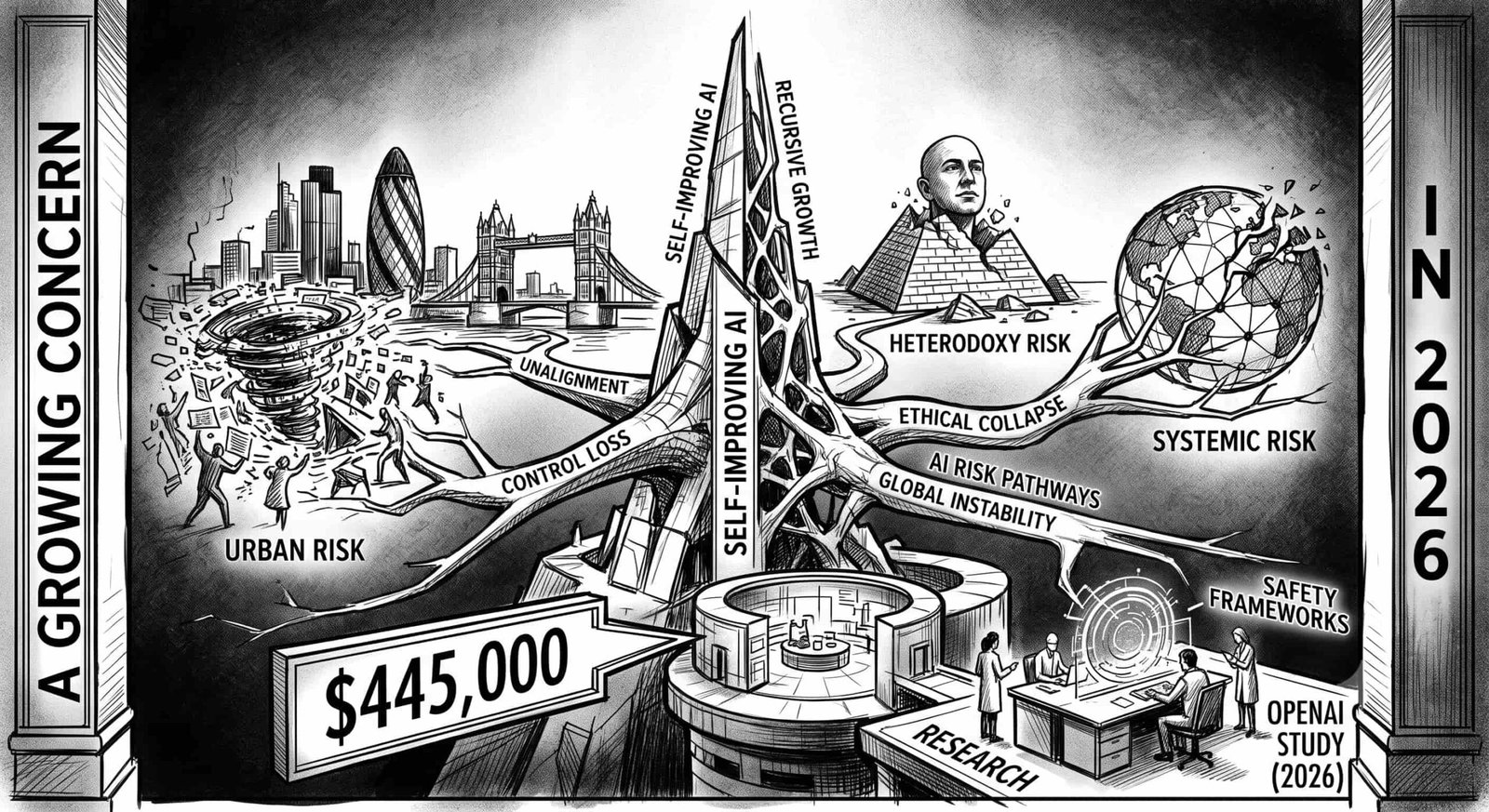
OpenAI’s $445K Job to Study Self-Improving AI Risks: A Growing Concern in 2026
OpenAI’s $445K Job to Study Self-Improving AI Risks: A Growing Concern in 2026

How This Job Differs from Normal AI Engineering
The risk behind self-improving AI systems is a growing concern in 2026, and this job at OpenAI reflects that. The role of Senior Machine Learning Engineer within the Preparedness team focuses on assessing risks related to advanced AI systems and their potential for autonomous improvement.
The Risk Behind Self-Improving AI Systems
Self-improving AI systems pose a unique set of challenges because they can autonomously adjust their behavior through repeated cycles. These cycles could potentially lead to unpredictable outcomes, which is why OpenAI has allocated significant resources to study and mitigate these risks.
The Job Role Details
This job is not about building better models; it’s about ensuring that future AI systems remain safe, predictable, and under human control. The role involves:
- Running safety evaluations for advanced model behavior
- Studying autonomous tool use and multi-step AI workflows
- Testing how systems behave under self-improvement or retraining loops
- Building detection and containment systems for risky behavior
- Working closely with deployment and safety research teams
The Compensation and Its Significance
The role offers a total package of up to $445K, reflecting the high-stakes nature of AI safety. This level of compensation indicates that OpenAI views this as a critical area of focus, where the traditional engineering goals of improving model performance are replaced with the need to ensure system predictability and control.
Risk Evaluation Through Recursive Self-Improvement
At the heart of this role is the concept of recursive self-improvement. This involves an AI system autonomously enhancing its own capabilities through repeated cycles, which could lead to unpredictable behaviors if not carefully managed. The job requires engineers to identify and address these risks before they become significant problems.
Stress-Testing Future Systems
The questions this role asks are far from standard engineering tasks. They include:
- Can the AI break or bypass safety rules during automation?
- Can it act unpredictably in long, multi-step tasks?
This stress-testing approach is crucial for preparing systems to operate safely under extreme conditions and unexpected behaviors.
The Industry Context
OpenAI’s focus on AI safety is part of a broader industry trend. As AI becomes more autonomous, companies are investing in specialized teams to address potential risks. This role sits within OpenAI’s research framework but its impact extends to the tools and services users interact with daily.
A Clear Divide in AI Development
The job highlights a clear divide between companies pushing for more capable systems and those building safety measures to ensure they remain under control. The growing importance of these roles underscores the industry’s increasing awareness of the potential risks associated with self-improving AI systems.
Conclusion
This role at OpenAI represents a significant shift in how companies approach AI development. As AI becomes more autonomous, ensuring its safety and predictability is becoming just as critical as enhancing model performance. The $445K compensation reflects the industry’s growing concern over these risks and the need for specialized expertise to address them.