
Hormonal Balance After 40: What Every Woman Should Know
Hormonal Balance After 40: What Every Woman Should Know
Discover what every woman should know about hormonal balance after 40, including common changes, symptoms, and practical strategies to support overall health.
Introduction
A friend of mine rang me last year. I knew before she’d really said anything — that specific kind of exhausted that has nothing to do with sleep. Forty-three, eight hours most nights, going to the gym, not eating badly. Still hitting a wall every afternoon she couldn’t push through. Her GP did bloods, everything came back fine, and she was sent away with advice to work on her stress levels. She texted me after: I feel like I’m losing my mind.
She wasn’t. Her hormones had been quietly shifting for a year or more. Nobody had picked it up. This is something that happens over and over — women in their early 40s going through changes, leaving GP appointments with normal results, and spending the next year deciding they’re not coping as well as they should be. If any of this sounds familiar, read on.
Perimenopause: The Early Signs
Perimenopause — the stretch that leads into menopause, sometimes by several years — can begin in the late 30s. Most women have no clue about what’s happening because the popular belief is that hormones stay more or less flat until around 50 and then taper off.
What actually happens: Oestrogen and progesterone start swinging around, sometimes dramatically. High one week, low the next, with no logic to it. That volatility drives most of the early symptoms women notice — not a gradual decline. Since oestrogen has a hand in over 400 bodily processes (serotonin, bone density, cholesterol, memory, heart function among them), when it starts behaving erratically, effects show up everywhere at once.
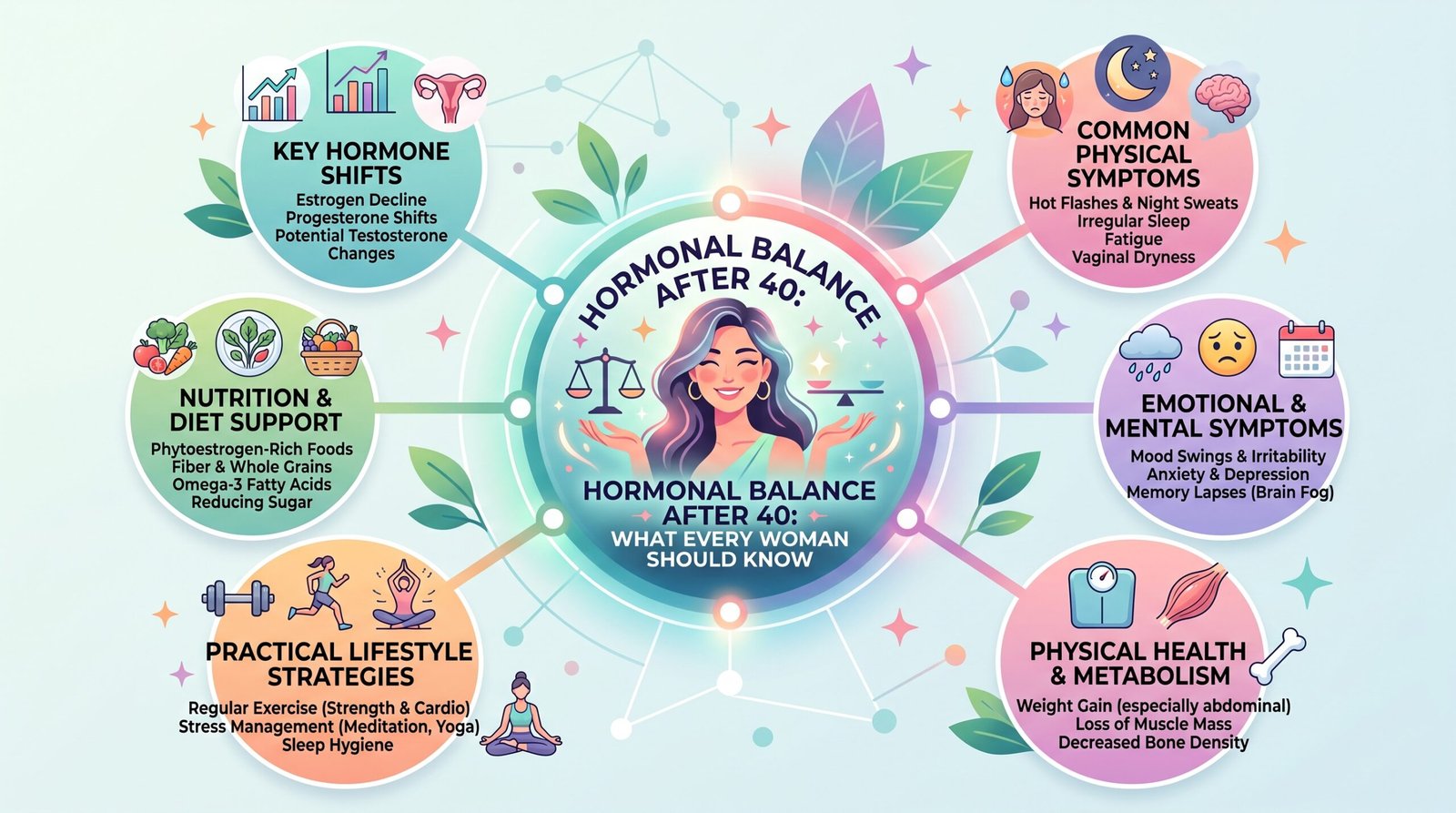
Symptoms and Effects
- Waking at 3am, mind already running, lying there for an hour unable to go back.
- A thickening around the middle that wasn’t there before and can’t be explained by anything you’ve changed.
- Periods that are suddenly much heavier or arriving every three weeks rather than four.
- A mental fog that isn’t quite tiredness — more like genuinely losing your thread mid-sentence, hunting for words that used to come easily, not being able to hold concentration the way you once could.
- Extra hair in the shower drain.
- Skin that’s turned dry or reactive and never used to be.
The Gut Connection
The gut microbiome has a well-documented, direct role in how your body handles oestrogen. There’s a community of gut bacteria — the estrobolome — whose specific job is regulating how much oestrogen gets reabsorbed back into circulation versus cleared out through excretion. It all runs through an enzyme called beta-glucuronidase.
Damage the microbiome — through antibiotics, chronic stress, years of low-fibre or heavily processed food — and the estrobolome misfires. Some women end up recirculating too much oestrogen: heavy periods, breast tenderness, bloating, mood all over the place. Others burn through it faster than they should.
Strategies for Hormonal Balance
The symptoms that keep getting blamed on other things are hot flushes and sleep disturbances. In my experience, hot flushes aren’t what most women find hardest. What tends to come first is more slippery: waking at 3am, mind already running, lying there for an hour unable to go back.
Addressing the Core Issues
- Gut Health: Focus on a balanced diet rich in fibre, flaxseed, oily fish, and fermented foods. Targeted shifts can have a significant impact on oestrogen metabolism and inflammation.
- Lifestyle Changes: Lift weights to protect bone density and support metabolic health. Cardio is fine but doesn’t replicate the benefits of resistance training for women over 40.
- Sleep Quality: Bad nights push cortisol up, making insulin resistance worse, and knocking every other hormonal signal sideways. If you’re regularly awake at 3am, treat it as a problem worth fixing.
Frequently Asked Questions (FAQ)
-
- Q: What are the symptoms of hormonal imbalance after 40?
A: Common signs include sleep disturbances, weight changes around the middle, heavy or irregular periods, and cognitive fog. Hot flushes can occur but aren’t always the most impactful symptom.
-
- Q: How does a healthy gut affect hormone balance?
A: A healthy gut microbiome helps regulate oestrogen metabolism, reducing symptoms like bloating and mood swings. Damage to the gut can disrupt this process, leading to hormonal imbalances.
-
- Q: Can lifestyle changes help manage perimenopausal symptoms?
A: Absolutely! Strategies such as strength training, a balanced diet rich in fibre, and addressing sleep quality can significantly impact hormone balance. Proper testing is crucial for identifying the root cause of symptoms.
Conclusion
The symptoms that keep getting blamed on other things are hot flushes and sleep disturbances. In my experience, hot flushes aren’t what most women find hardest. What tends to come first is more slippery: waking at 3am, mind already running, lying there for an hour unable to go back.
Most women in that position can get there with proper testing and targeted changes. It just requires more pushing than the system makes easy. Insist on proper testing. Take gut health seriously, not as an afterthought. Don’t make peace with broken sleep. And if you’ve already changed everything you can think to change and nothing is shifting — don’t stop there. There’s almost always a reason. It’s almost always findable.