
Essential Tech Skills in Healthcare
Essential Tech Skills in Healthcare: A Comprehensive Guide
Tech skills are a hot commodity in healthcare, particularly amid burnout for both tech professionals and healthcare workers.
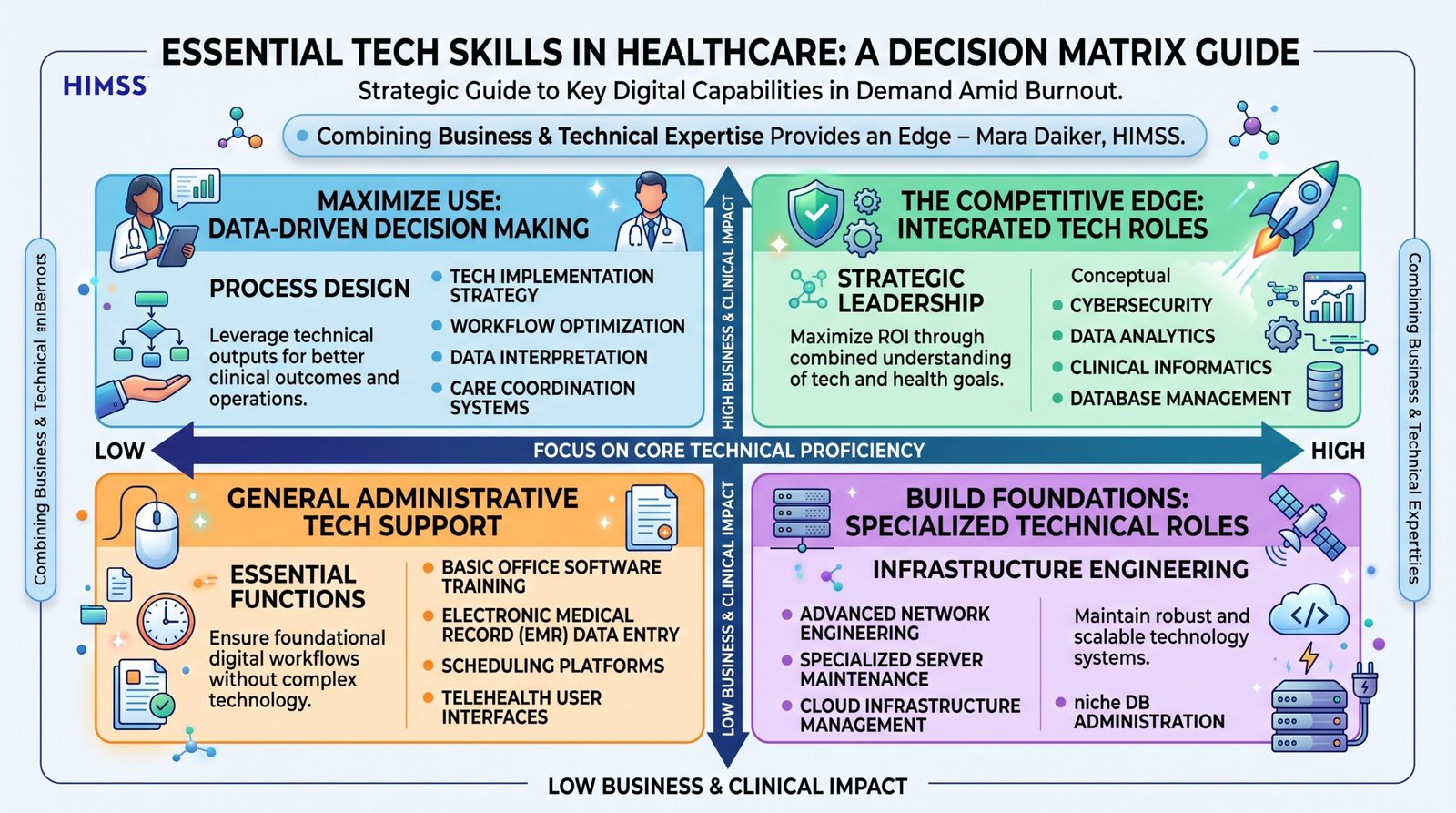
From strong data analytics skills to clinical informatics, database management, and cybersecurity, many critical skills are in demand. Health IT professionals who combine business and technical expertise will have an edge according to Mara Daiker, senior director of professional development at the Healthcare Information and Management Systems Society (HIMSS).
Combining Business Skills with Tech Expertise
Cross-functional skills such as communication, collaboration, change management, and translating technical concepts for clinical and executive teams are becoming essential. Professionals who can combine technical expertise with healthcare domain knowledge and strategic thinking are most likely to be successful.
- Communication: Ability to explain complex tech matters in a way that is easily understood by different stakeholders, including nurses, CFOs, and board members.
- Collaboration: Working effectively with multidisciplinary teams to ensure seamless integration of technology into clinical workflows.
Key Skills in Data Analytics
Data analytics skills are crucial for optimizing workflows and systems. Skills needed include data visualization, predictive analytics, SQL, Python, and statistical analysis. A dashboard that is easy to read and understand is also essential.
“The people who can take something complicated and make it land with a nurse, a CFO or a board member are the ones who actually move the needle,” – Luke Carignan, Senior Strategy Director for Healthcare at Phenom.
Data Management in Healthcare
A key goal is data interoperability. Learning how to work with healthcare data standards and understanding coding systems like claims and clinical data will be beneficial.
- SQL, Python: Essential for pulling and analyzing data effectively.
- Clinical Data: Understanding the nuances of clinical care and operational workflows to ensure accurate analysis.
Data Science and Informatics
In informatics, professionals serve as a “bridge” between AI vendors and clinicians. Skills needed include critical thinking, statistical analysis, and building user-friendly dashboards. Medical data analyst roles require knowledge of coding systems and regulatory requirements.
AI in Healthcare: A Growing Trend
The healthcare industry is actively pursuing AI in areas such as analytics, clinical documentation, workflow automation, and operational decision-making. However, the industry is still in early adoption phases, particularly in scaling AI responsibly, securely, and effectively.
- AI Governance: Creating new layers of operational governance around AI outputs, workflow orchestration, and provenance tracking.
- Evaluation and Training: Ensuring that clinicians are trained to use AI tools effectively.
Cybersecurity in Healthcare
Cybersecurity is critical for protecting patient safety, especially during supply chain threats or ransomware attacks. Key skills include risk management, incident response, and data privacy. Certification options include HIMSS Certified Professional in Healthcare Information and Management Systems.
- HIMSS Certification: HIMSS offers online webinars to help professionals stay up-to-date with the latest cybersecurity trends and best practices.
- Data Privacy: Understanding compliance requirements like HIPAA is essential for maintaining patient trust and ensuring legal adherence.
Common Mistakes and Best Practices
Mistakes to avoid include underestimating the importance of communication, collaboration, and change management. Best practices include fostering a culture of continuous learning and professional development, particularly in emerging areas like AI governance.
- Continuous Learning: Pursuing academic programs such as master’s degrees in healthcare analytics or health informatics.
- Reskilling Teams: Preparing existing staff to work with new technologies and tools, particularly in AI governance.
FAQ Section
Q: What are the most important skills for a healthcare informatics specialist?
A: The best informaticists are clinicians who also speak technology. They can sit next to physicians, watch them struggle with workflow issues, and fix them.
Q: How does AI governance impact the success of AI in healthcare?
A: AI governance is crucial for ensuring that AI tools are validated, contextualized, and operationalized responsibly. It involves creating new layers of governance around AI outputs, workflow orchestration, and provenance tracking.
Conclusion
The tech skills in healthcare are rapidly evolving. Professionals who can combine technical expertise with business acumen will be in high demand. Continuous learning and professional development are key to staying ahead of the curve. As the industry moves towards greater reliance on AI, cybersecurity, and data analytics, it is essential for health IT professionals to stay informed about emerging trends and best practices.
For more insights on the tech job industry, visit our resources page or sign up for a free Dice profile today!
Explore Tech Jobs Insights
Discover Great Career Insights
References: