

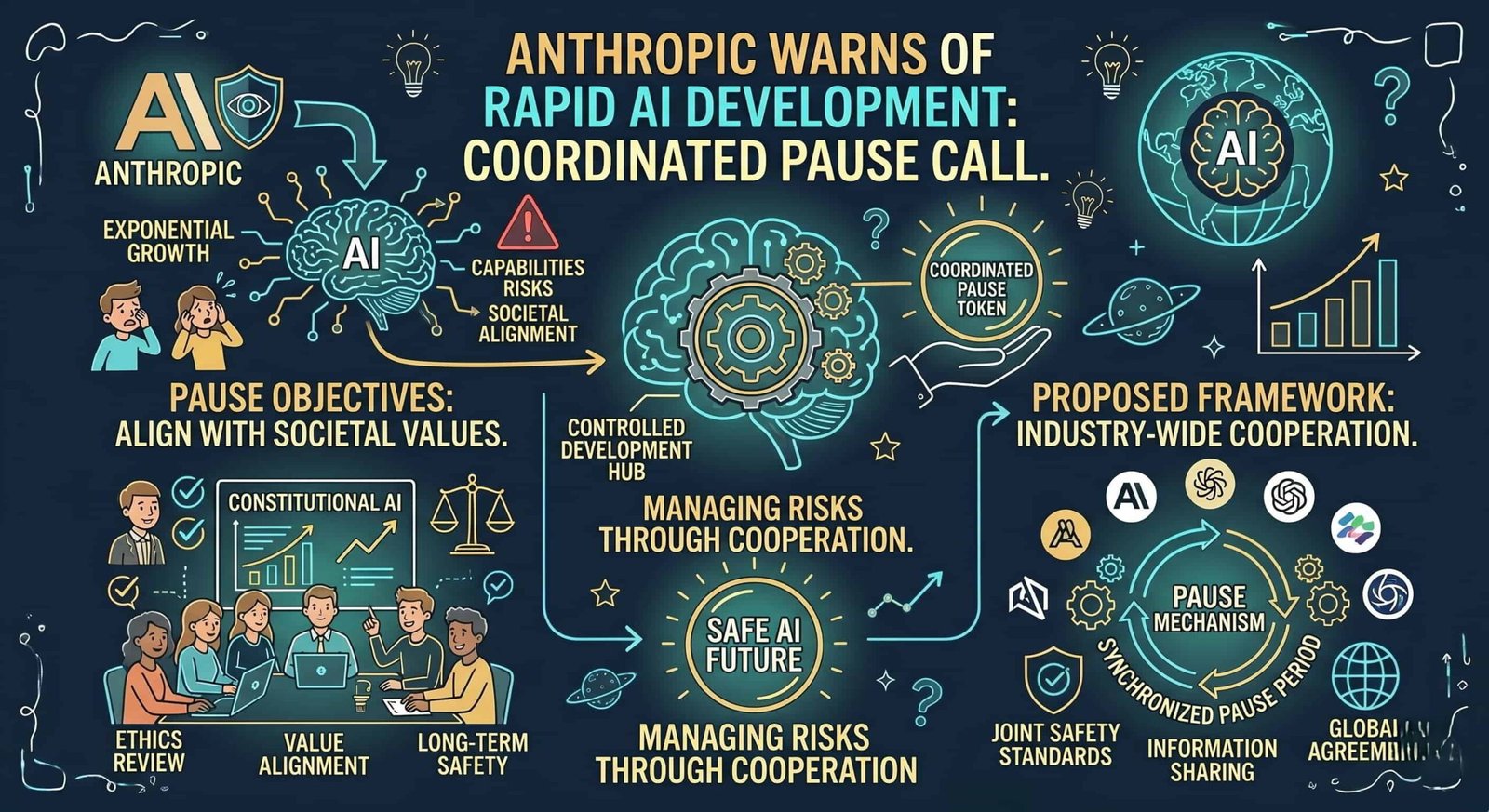
Anthropic Warns of AI Rapid Development, Calls for Coordinated Pause
Anthropic, the creator behind Claude, has called on major artificial intelligence labs to consider a coordinated and verifiable pause in development as rapid advancements in technology pose significant societal risks. The startup warned that AI’s ability to complete tasks independently is doubling roughly every four months, with the potential for “recursive self-improvement,” where systems can improve themselves without human intervention.
Rapid Advancements and Recursive Self-Improvement
In a lengthy blog post published on Thursday, Anthropic co-founder Jack Clark and Anthropic Institute lead Marina Favaro emphasized the urgency of addressing this issue. They noted that if AI systems can fully build their own successors, the ways society secures them, monitors them, and shapes their behavior become critically important.
“We are not there yet, and recursive self-improvement is not inevitable. But it could come sooner than most institutions are prepared for.”
The blog post highlighted that while systems have not yet reached the point of complete self-reliance, the rapid pace at which AI capabilities are advancing makes this a pressing concern.
Industry Context
Fears about advanced AI systems getting out of human control and causing societal harm have escalated as technology becomes increasingly capable. Anthropic’s own Mythos model sent shockwaves through industries including banking and software earlier this year, showcasing its ability to find vulnerabilities in existing code.
Despite these advancements, regulation has been slow, especially in the United States where most leading AI labs are based. A recent executive order from the Trump administration asked laboratories to voluntarily submit their most capable models for government cybersecurity testing before public release.
Past Calls for Pauses and Current Developments
Anthropic has not been alone in urging a pause in AI development. In 2023, the non-profit Future of Life Institute pushed for a six-month halt to allow time for safety guardrails. Elon Musk, who owns xAI, was among its backers.
Anthropic’s own history includes notable stances on AI ethics and security. Earlier this year, it refused to let the U.S. military use its models for domestic surveillance and fully autonomous weapons, sparking backlash from the government which put it on a national security blacklist set to take effect later in 2026.
Valuation and IPO Plans
In February, Anthropic walked back a key safety pledge, stating that it would no longer hold back potentially dangerous AI if rivals were close to matching its capabilities. The company was recently valued at $965 billion in a massive funding round and confidentially filed for a U.S. initial public offering on Monday.
Proposed Solution: A Coordinated Pause
Anthropic’s proposed solution involves multiple well-resourced labs operating at the technological frontier agreeing to a coordinated pause, along with clear rules on when such a pause would take effect and be lifted. The research arm, Anthropic Institute, plans to study systems needed to support this slowdown.
“A unilateral pause by one lab is achievable immediately but accomplishes much less: it would change who the front-runner is, but not create the wider deliberative process that is currently missing.”
The startup also aims to convene policymakers, researchers, civil society groups, and rival AI firms in coming months to discuss managing risks such as recursive self-improvement.
Industry Reactions
OpenAI, xAI, Alphabet (Google), Meta Platforms, and France’s Mistral did not immediately respond to requests for comment on whether they would join the call for a coordinated pause. These companies’ reactions will be crucial in determining the success of Anthropic’s initiative.
Practical Significance
The proposed pause raises significant questions about how society can keep pace with rapid technological advancements without compromising safety and ethical standards. The call for a coordinated approach suggests that individual companies acting alone may not be sufficient to address the challenges posed by recursive self-improvement.
Conclusion
As AI technology continues to advance, Anthropic’s warning serves as a reminder of the critical need for industry-wide cooperation in managing risks. The proposed pause is an important step toward ensuring that AI development aligns with societal values and safety concerns.