

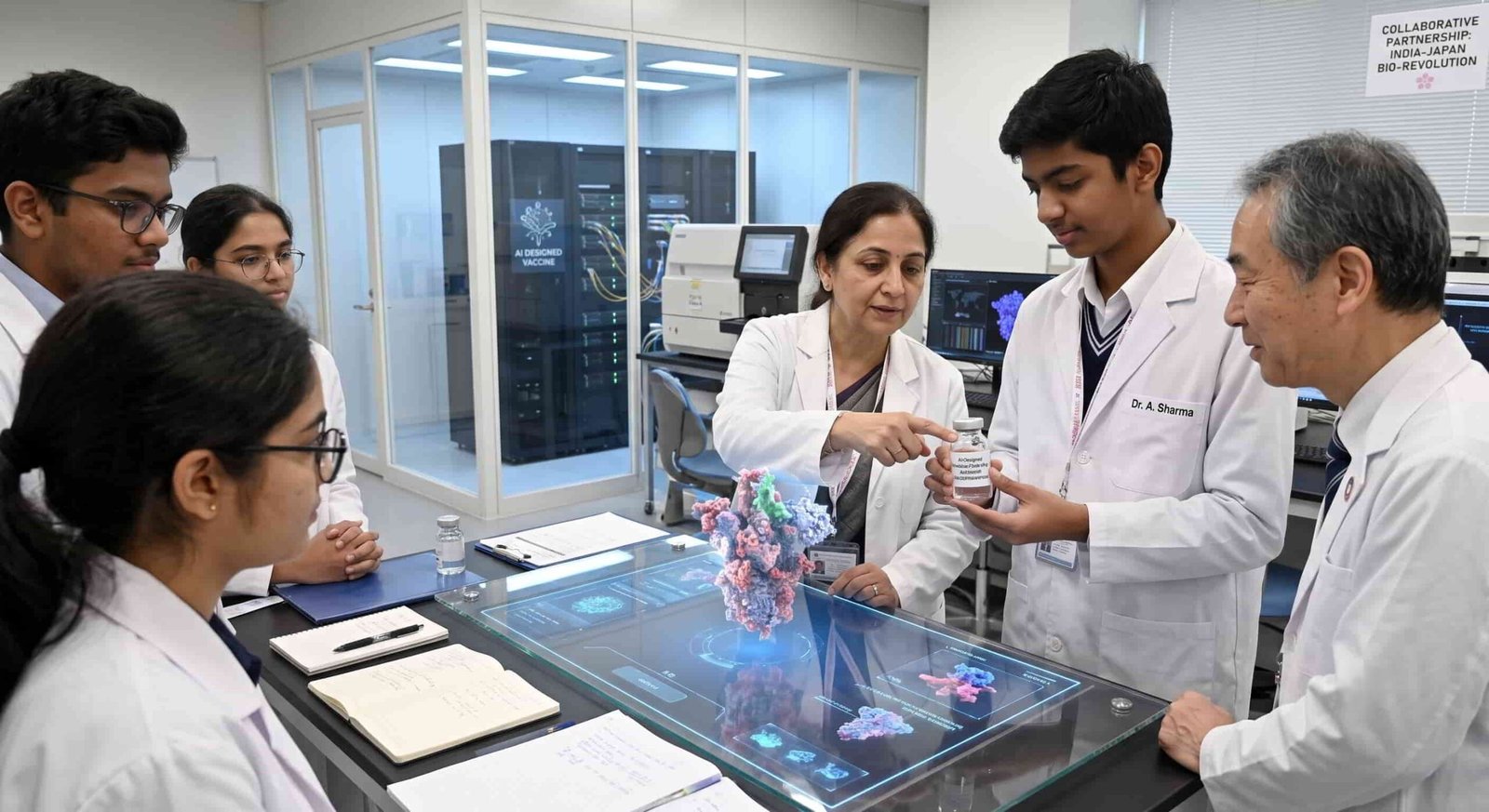
World-first AI-designed Vaccine Could Offer Broad Protection Against Viruses
In a groundbreaking development, researchers from the University of Cambridge have utilized artificial intelligence (AI) to design a “fundamentally new” type of vaccine that could protect against a wide range of viruses, potentially preventing future pandemics. This achievement marks the first time an AI has been used to develop a key component of a vaccine and then trial it in humans.
New Vaccine Design Challenges Traditional Methods
The traditional approach to vaccine development involves targeting specific strains or mutations of viruses, which can quickly become outdated due to the rapid evolution of viral pathogens. The AI-designed vaccine, however, takes a different approach by targeting all coronaviruses, including existing and potential future variants that could originate in animals.
Technical Breakthrough
The team at Cambridge has engineered a “super-antigen” using AI to train the immune system in such a way that it can recognize and combat the entire family of coronaviruses, even if these viruses mutate or jump species. Antigens are critical components of vaccines as they signal the body’s immune response. This technology represents a significant shift in how we prepare for pandemics.
Initial Safety Trials
The AI-designed vaccine underwent initial safety trials involving 39 people, which were successful. A larger study of around 200 individuals is currently underway to further assess the vaccine’s efficacy in training the immune system. The findings published in the Journal of Infection indicate that while the impact on the immune system was modest, the technology demonstrated promising potential.
Broader Applications
The AI-designed super-antigen is not limited to coronavirus protection. The Cambridge team is already working on separate vaccines for influenza and Ebola. These efforts include developing a universal seasonal flu vaccine that would not require annual updates, as well as an H5N1 bird flu vaccine in case the virus evolves into a human pandemic.
Expert Perspectives
“This is about making vaccines that protect us, not just from today’s viruses, but protect us from what can cause the next outbreak or disease. This is a fundamental shift in how we prepare for pandemics.” – Professor Jonathan Heeney, University of Cambridge
Professor Saul Faust, who participated in some of the trials at the University of Southampton, echoed these sentiments, stating that the technology “definitely has potential” and was “really exciting.”
Future Implications for Vaccine Research
“The real test is what happens in human trials as our immune systems are different to laboratory mice. But this approach could be a game changer for vaccine research, predicting how the immune system will respond and making development much faster.” – Professor Andy Pollard, Oxford Vaccine Group
Professor Marian Knight from the National Institute for Health and Care Research emphasized the significance of these findings, stating that “the remarkable success of this AI-designed ‘super-antigen’ trial marks a pivotal leap forward in our ability to deliver broad, lasting viral protection.”
Government Support
“Another British science success story, this is a great example of how we can bring our research expertise together with AI to deliver new treatments. With the first human trials showing positive results, this work could help speed up the roll out vaccines to benefit people all over the world for the long-term.” – Science Minister Lord Vallance
Practical Significance and Market Impact
The development of AI-designed vaccines holds significant practical implications. By creating a more universal approach, researchers can potentially circumvent the need to update vaccines annually or for specific mutations. This could lead to more efficient vaccine production processes and faster responses to emerging viral threats.
However, there are challenges ahead, as the efficacy of AI-designed super-antigens in human trials remains to be fully established. The immune systems of humans and mice can differ significantly, making it crucial to conduct thorough testing before widespread deployment.
Conclusion
The success of this AI-designed vaccine represents a significant leap forward in our ability to protect against viral threats. As research continues, it is likely that we will see further developments in this area, potentially leading to more efficient and effective vaccines for a wide range of viruses.
- Initial safety trials involving 39 people were successful
- A larger study with around 200 individuals is ongoing
- The vaccine could protect against all coronaviruses, including future mutations and species jumps
- The technology has the potential to be applied to other viruses such as flu and Ebola