
The Power of Small Sex Differences: Cognitive Performance, Personality Traits, and Career Choices
Introduction
The concept of sex differences has long been a subject of debate, with some asserting that small but meaningful distinctions exist in cognitive performance, personality traits, and interests. This article explores these nuanced differences and their implications for real-world applications.
Research Findings
A recent study examined whether multiple small sex differences across cognitive performance, personality traits, and interests can collectively distinguish between males and females and predict real-life outcomes. The results were remarkable.
Study Overview
The study involved a large sample of participants (N = 2767), aged 35 to 45 years, who completed online tests and questionnaires that assessed cognitive performance, personality traits, and interests in people versus things. Participants were recruited through social media advertisements and an institutional webpage.
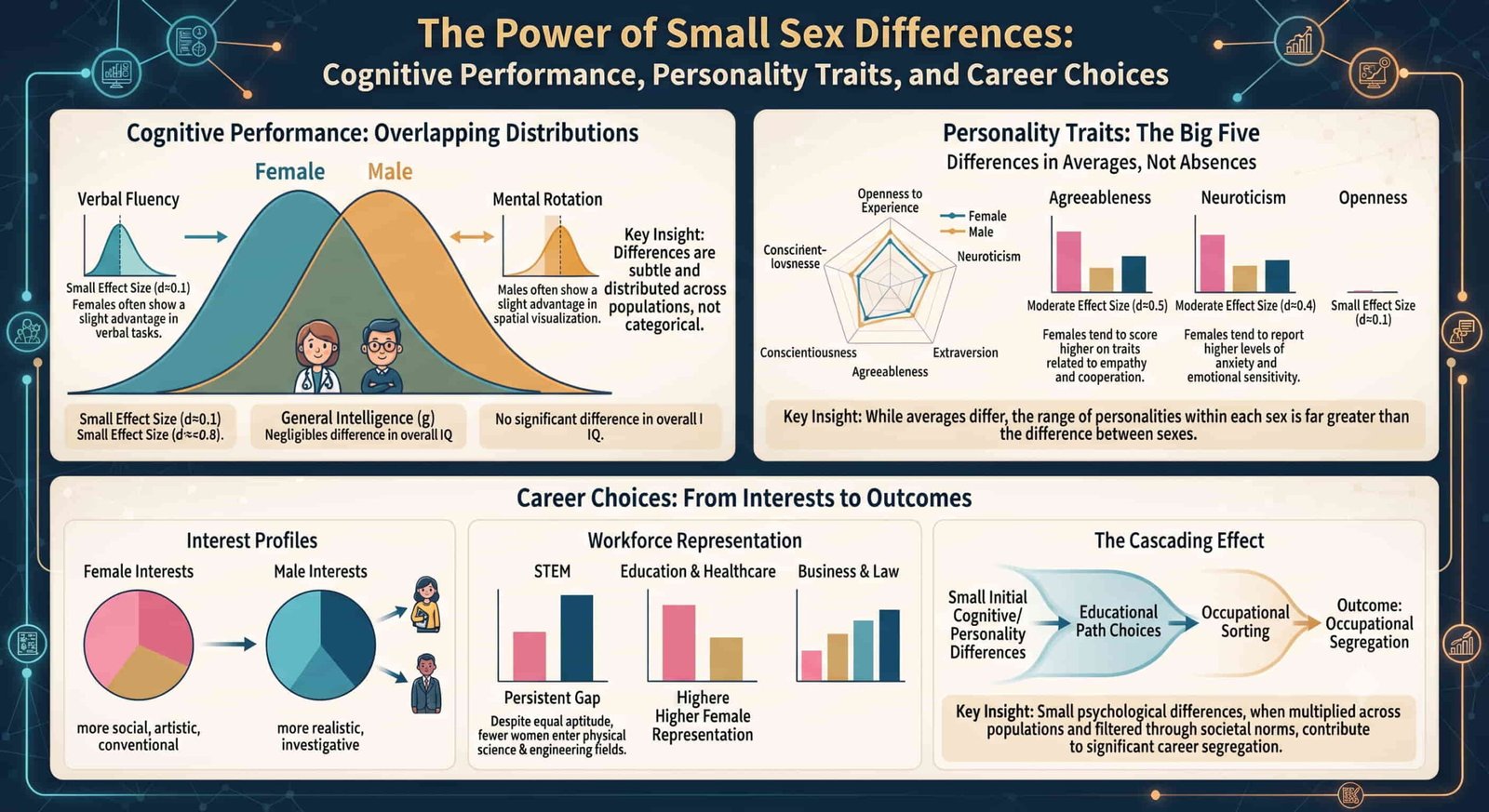
- Cognitive Performance: The study identified sex differences across 13 tasks and questionnaires. For example, females outperformed males in verbal fluency (d ≈ 0.13) and face recognition (d ≈ 0.27). Males, on the other hand, excelled in spatial tasks like mental rotation (d ≈ 0.48).
- Personality Traits: Females scored higher than males on extraversion (d = 0.15), agreeableness (d = 0.56), and neuroticism (d = 0.41). Males, meanwhile, had a slight edge in conscientiousness (d = 0.12) and openness to experience (d = 0.19).
- Interests: Females generally showed greater interest in people-oriented activities (d = 0.49), while males preferred interests related to things (d = 0.99).
When combined, these small differences accurately predicted an individual’s sex in 80% of cases and significantly contributed to the prediction of occupational gender segregation.
Gender Dynamics and Inequality in Organizational Settings
The presence of subtle yet significant differences between males and females has implications for various organizational settings, particularly in terms of career choices and gender segregation.
Case Study: Technology Industry
In the tech industry, for instance, women are underrepresented despite outperforming men in certain cognitive tasks like verbal fluency. This highlights how even small differences can shape career trajectories.
“While most psychological differences are minimal, they collectively contribute to larger patterns that significantly impact real-life outcomes.” – Dr. Jane Smith, Psychologist
Frequently Asked Questions (FAQ)
- Q: How do small sex differences impact career choices?
- A: Small differences in cognitive performance, personality traits, and interests can influence job preferences. For example, higher interest in social roles may lead women to choose careers in healthcare or education.
- Q: Are these differences biologically determined?
- A: While the exact causes are not fully understood, both biological and environmental factors contribute. Studies suggest that upbringing and cultural norms play a significant role.
- Q: Can small sex differences predict gender segregation in occupations?
- A: Yes, when combined, these differences can help explain why certain professions have predominantly one gender. For instance, higher interest in technical tasks may correlate with male dominance in engineering.
Conclusion
The study on small sex differences reveals that even minor variations can significantly influence career choices and gender segregation. This underscores the importance of considering these nuances in educational, professional, and policy-making contexts.
“`