

AI Tools Reveal Security Gaps in CBSE Portal and Other Educational Institutions
In recent years, the use of advanced AI tools has significantly enhanced security measures in various sectors. However, their application in educational institutions has not only identified potential weaknesses but also highlighted critical vulnerabilities. This article delves into a case where AI tools exposed serious security gaps in the Central Board of Secondary Education (CBSE) portal and explores broader implications for other institutions.
Introduction
The CBSE, as one of India’s leading educational boards, has been a target for cyber-attacks. In 2023, it was revealed that AI tools were instrumental in uncovering significant security flaws within the CBSE portal, which handled sensitive information such as student records and examination results.
Experts from IITs flagged these gaps, emphasizing the need for robust cybersecurity measures to protect the data of millions of students. This incident serves as a cautionary tale, urging educational institutions across India and globally to reassess their current security practices and implement advanced technologies to mitigate risks effectively.
Security Issues in CBSE Portal
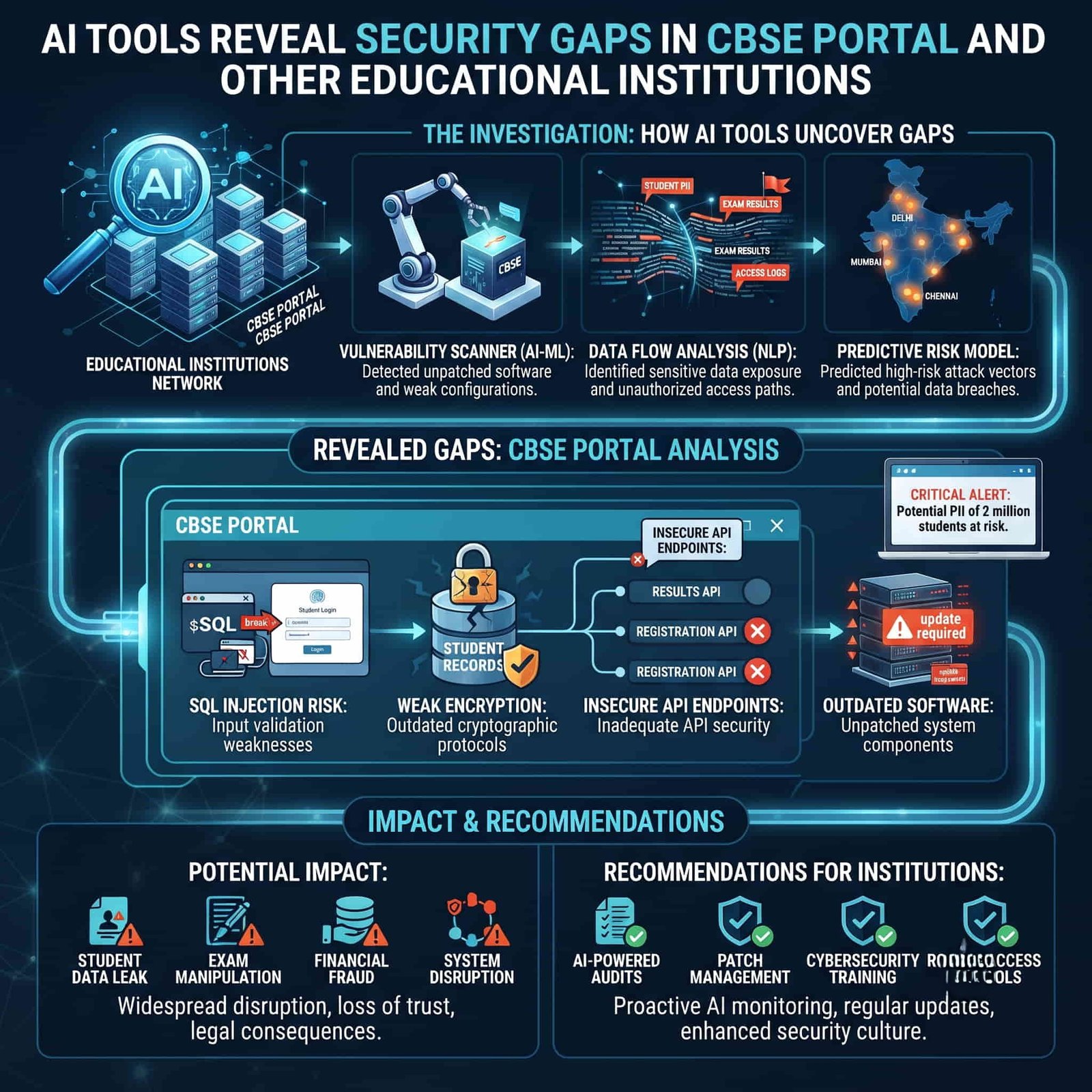
The vulnerabilities identified by AI tools included inadequate encryption, weak password policies, and unpatched software. These lapses could potentially allow unauthorized access to sensitive information, leading to data breaches and other malicious activities.
A detailed analysis of the findings revealed that certain sections of the CBSE portal were particularly vulnerable due to outdated security protocols. For instance, some user authentication mechanisms failed to meet modern standards, leaving them open to brute-force attacks. Additionally, there were instances where encryption was not employed properly, exposing plaintext data to potential interceptors.
The impact of these security gaps extends beyond just the CBSE portal; it underscores the broader risks faced by educational institutions that rely heavily on digital systems for managing their operations and student information.
Broader Implications for Educational Institutions
The security issues discovered in the CBSE portal are indicative of a larger problem affecting many educational institutions. With the increasing reliance on technology, schools and universities must ensure that their digital infrastructure is secure to protect student data.
A study conducted by tech experts at IIT Delhi highlighted several common vulnerabilities shared across multiple educational portals. These include:
- Insufficient encryption of sensitive data
- Lack of multifactor authentication (MFA) mechanisms
- Inadequate patch management practices
- Poorly configured firewalls and network security systems
To address these issues, educational institutions should adopt a proactive approach to cybersecurity. This includes:
- Implementing robust encryption standards for all data transmissions and storage.
- Integrating MFA as an essential component of user authentication processes.
- Establishing comprehensive patch management procedures to address software vulnerabilities promptly.
- Conducting regular security audits and penetration testing to identify and rectify potential weaknesses.
CASE STUDY: CBSE Portal Security Flaws
“The AI tools used in this case provided us with a comprehensive understanding of the security landscape within the CBSE portal. It was clear that immediate action was required to prevent any potential breaches,” said Dr. Ramesh, an expert from IIT Kanpur.
The analysis conducted by these experts involved:
- Scanning the portal for known vulnerabilities using AI-driven security tools.
- Evaluating the effectiveness of encryption methods employed by the CBSE.
- Testing the resilience of user authentication systems against common attack vectors.
- Reviewing system logs to identify any unauthorized access attempts or suspicious activities.
The findings were alarming, with multiple instances where the security measures in place did not meet industry standards. The CBSE portal was found to be vulnerable to various types of attacks, including:
- Man-in-the-Middle (MitM) attacks
- Injection attacks (SQL and XSS)
- Session hijacking
- Cross-Site Request Forgery (CSRF) exploits
Conclusion: Emphasizing the Need for Enhanced Security Measures
The security gaps identified in the CBSE portal serve as a stark reminder of the challenges educational institutions face when it comes to cybersecurity. While AI tools have played a crucial role in uncovering these issues, they also highlight the necessity for continuous improvement and innovation in this domain.
It is imperative that educational institutions adopt robust security practices to safeguard sensitive information and maintain trust with students, parents, and stakeholders. By investing in advanced technologies and maintaining vigilance against emerging threats, schools can ensure a secure environment for learning and teaching.
Frequently Asked Questions
-
- Q: How did AI tools help in identifying security gaps?
A: AI-driven security tools can analyze vast amounts of data quickly and accurately, detecting patterns and anomalies that may indicate vulnerabilities. These tools use machine learning algorithms to simulate attacks and assess the effectiveness of current security measures.
-
- Q: Are there any specific steps schools should take to enhance their cybersecurity?
A: Yes, schools can implement several key strategies:
-
-
- Regularly update software and patch vulnerabilities
- Implement strong password policies and multifactor authentication (MFA)
- Use encryption for data at rest and in transit
- Conduct regular security audits and penetration testing
- Q: How can educational institutions stay informed about the latest cybersecurity threats?
-
A: Staying informed involves:
-
- Subscribing to industry newsletters and updates from reputable sources
- Participating in security conferences and workshops
- Engaging with cybersecurity experts for guidance and best practices